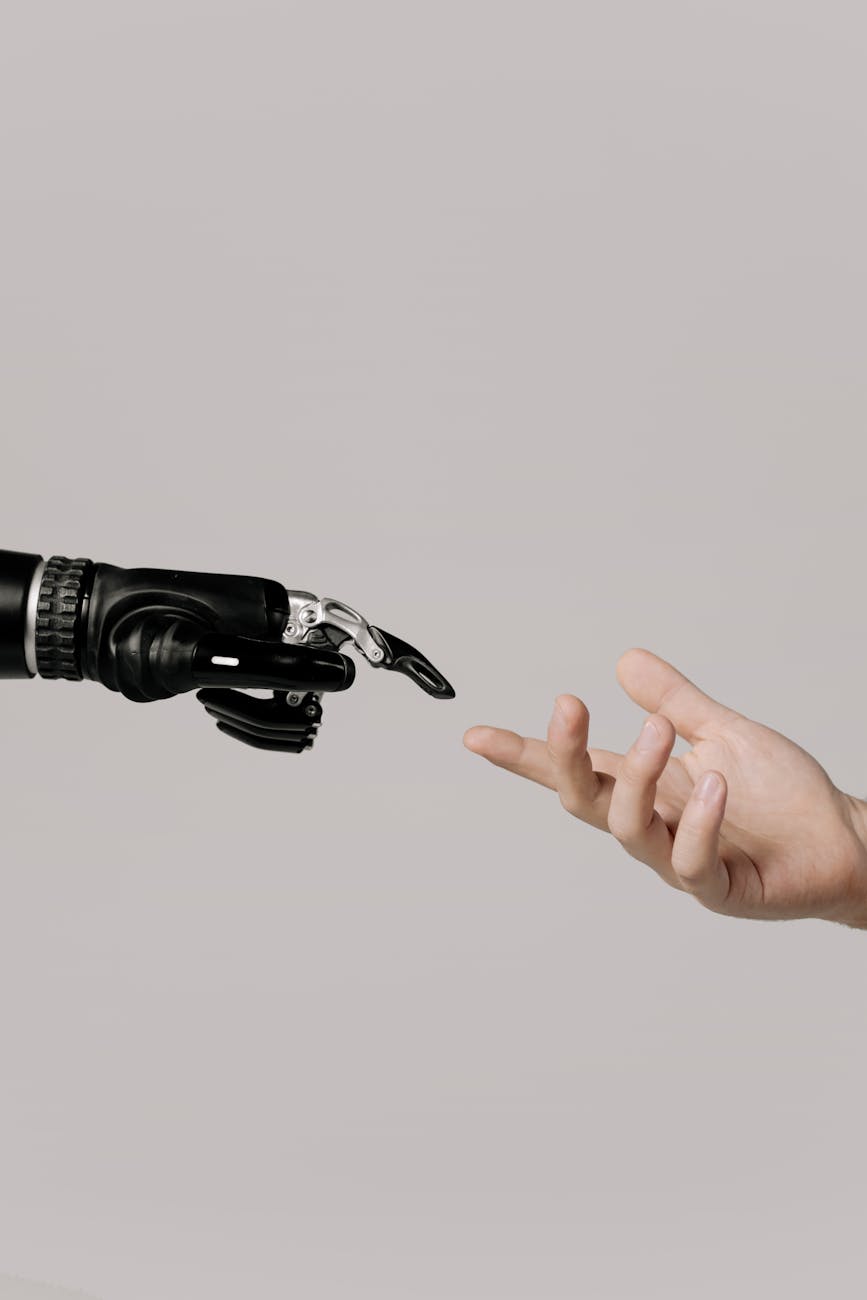
A friend of mine recently shared an article with me on how AI robots are being used in South Korea to help care for the elderly.
I read it with interest and some trepidation, while the article outlines some time saving and efficiency benefits of using this technology in a stretched care system, it also raised issues about the elderly patients’ sometimes problematic attachment to these AI bots as well as some privacy challenges.
Fortunately for me, I don’t have to turn to ChatGPT for some context around this issue, as I happen to work with a world-leading AI expert (and total fashionista) Ivana Bartoletti. Below are her thoughts on the matter:
– For those of us who don’t email you 10 times a day, could you introduce yourself and give us a quick overview of your background?
I spearhead privacy and AI governance at Wipro, a leading technology consultancy, and regularly speak and write on the intersection of technology, law, privacy, and ethics. My work spans multiple sectors, and I founded the Women Leading in AI network to bring more women into AI leadership roles. I am also an author and frequent commentator on these critical issues shaping our digital future.
– Could you share what your relationship to care is like?
It is complicated and deeply personal. I have someone very dear to me who needs care, but distance means that responsibility falls on others. Watching the challenges from afar is painful. I contribute what I can and prioritise spending any spare time with my loved ones, but it has made me acutely aware of the emotional and practical burdens that caregivers face daily.
– What do you think of AI-enabled tech and robotics in the world of care? The article outlines it could save precious time for caregivers?
Let me be absolutely clear: while AI-enabled technology can support caregivers and free up valuable time and resources, it is not a substitute for proper public policy and adequate investment in care infrastructure. This distinction is crucial because we live in a techno-solutionist era, the misguided belief that AI can solve all problems.
AI can support, facilitate, and assist, but real solutions require human beings working through political and policy channels. Technology should amplify what we want to achieve, not replace our collective responsibility.
That said, as our elderly population grows, AI’s role in care will become increasingly important. It can revolutionise care delivery, create cost efficiencies, and enable personalised care plans that help elderly patients receive the health management they need to live with dignity and independence.
– Older people often suffer from loneliness and isolation, could the ‘smart’ companionship AI robots provide some relief to that?
We need to approach this thoughtfully and holistically, without rushing toward AI companions as a quick fix.
First, let’s focus on AI’s proven capabilities: predicting health risks and facilitating daily living. AI can genuinely help older people lead healthier, more independent lives. This requires close collaboration between tech developers, healthcare professionals, and policymakers.
We should start with predictive tools for better resource allocation, then move to daily life assistance, helping with medication reminders, household tasks, and home monitoring systems that can alert healthcare professionals and families when something goes wrong.
Regarding companionship, natural language processing does show promise in simplifying communication for elderly users. AI devices can adapt to natural speech patterns and facilitate better connections. But I see AI’s role as supporting elderly people to communicate more easily with their loved ones – not replacing those human connections.
– As an AI expert, what are your thoughts on the use of these AI bots taking more and more space in our lives?
Over recent months, we have witnessed AI’s darker implications. Even Sam Altman admits he hasn’t had a good night’s sleep since launching ChatGPT. While these tools excel at productivity and assistance, we are beginning to understand their profound impact on how we think, both as individuals and as a society. The question isn’t whether AI can do more, but whether we should let it.
– The article outlines some of the risks of these AI care robots? What do you think the main ones are?
Three critical risks stand out. First, privacy violations. These systems collect vast amounts of personal data—connecting to platforms like Alexa or Siri and processing intimate details about people’s habits, health metrics, and daily routines. Personal data isn’t just information: it is people’s lives digitised.
Second, algorithmic bias poses serious dangers. If an AI system is trained on data from specific population segments, it might fail to recognise warning symptoms in patients from different backgrounds, potentially life threatening oversights.
Finally, there’s a broader societal risk: using AI as a band aid for systemic care failures. AI cannot solve caregiver fatigue or inadequate care infrastructure. We must not use technology to reinforce the unsustainable burden on individual caregivers, even if we sweeten it with promises of minor relief.
– In summary, how would you like to see the use of AI in caregiving evolve, for it to be safe?
I’d like this moment to spark a fundamental rethinking of care itself. Picture a robot lifting an elderly patient, feeding them, ensuring they’re clean and fed but providing zero emotional warmth. Is this progress or a dystopian nightmare?
This is our opportunity to examine our values and desires as a society. Using AI to sidestep crucial debates about what care means is pure techno-solutionism, and it is ultimately a short-sighted approach. True safety in AI caregiving means ensuring technology serves human dignity, not replacing it.
–
I think these insights can all be useful for us unpaid carers as we see AI seeping into every part of our lives. I’ll be watching how this unfolds.(And yes, I know, Ivana is *very* cool.)
 Number Eighteen, in the corner