One year, when I was living in London, short of Christmas present ideas for my grandmother, I went to Fortnum & Mason (a very high end delicatessen) and bought her a box of chocolate champagne truffles. I reasoned that anything good enough for the British Royal family and involving alcohol would be an acceptable Christmas treat. I was right. She loved them. She loved them so much that she hid them from the rest of the family so nobody could even taste one. A Christmas tradition was born; before every festive trip up North, I had to brave the throngs of tourists, fight my way to the chocolate section of this world-famous shop to buy her a box of these expensive and apparently delicious-enough-to-hide-from-the-family truffles. One year, probably distracted by the crowds, I accidentally bought her a smaller box of those delights. Her eyesight was better then and she immediately spotted it was the wrong size.
‘Don’t they make the usual size anymore?’ She asked, disappointed, as I handed her the box on Christmas morning.
‘Oh! Did I get the wrong box? Sorry I was rushing! I’m sure they still taste the same.‘
‘It won’t be the same…’ She sighed dramatically.
It took me until the next Christmas to live it down, and she relished telling anyone who would listen that her granddaughter had ruined Christmas because of her truffle kerfuffle.
When I came to live with her, the tradition continued and through the magic of online ordering, they also became her birthday present. She is always suspicious of the ones I order online so whenever I go to London, getting her a ‘proper’ box (meaning physically going to the shop to get it) becomes a top priority. No amount of work, meetings, or social engagements can get in the way of my mission. I have not yet failed, and always add a ‘Fortnum truffles’ time slot in my diary. She is always delighted to hide them away as soon as I come home, and start her ritual of eating two every night at 8pm on the dot. This habit has no rhyme or reason but she sticks to it religiously.
Grandma’s other culinary weakness is altogether less extravagant. She loves Jelly Babies, the classic British sweet (or candy for American readers). She eats industrial amounts of them and also keeps them hidden despite me assuring her there is no danger of me stealing them. I always buy her a bag during the weekly shop and the neighbours get her huge boxes of them for Christmas and birthdays, along with a bottle of wine, the perfect gift for her as far as she is concerned. Her love of those sweets is a little baffling as she hates jelly and its texture – what Jelly Babies are made of – but this is typical of her idiosyncrasies.
Despite her love of chocolates and sweets, I make sure she has a healthy diet and cook all our meals. I eat a lot more vegetables than she is used to and, to her horror, drink mainly water. I blame my French side. Getting her used to more vegetables and less bacon was a bit challenging but she soon got used to it and now wastes no time in requesting a rota of her favourite dishes for me to make. She doesn’t know this, but she eats most of the foods she has an irrational hatred of, despite never having tried them. I hear some of the tactics I use are similar to that of cooking for fussy toddlers, I’ll let you be the judge of that.
Top tips when cooking for the elderly:
- Be vague on the recipe and ingredients.
The less they know, the better. I never tell my grandma that I’ve used any of the foods she fears or any ingredients she’s not heard of. She always likes the finished product, which is all that matters. Even if it does contain chickpeas or courgettes. - Pay attention to textures.
I never make anything too crispy or crunchy as she has difficulty eating it. Similarly, I don’t serve long types of pasta like spaghetti or linguine because she has trouble twiddling the fork. Handily, she loves a lasagna recipe I’ve invented and a spicy prawn pasta dish so she never feels deprived, I just get creative with pasta choices. - Lie.
Tell them what they want to hear, an extension of the first point. Don’t like yoghurt? No problem, it magically turns into cream when I serve it with apple pie and she licks the plate clean. Grandma sometimes requests a cup of tea in the evenings despite it ruining her (already elusive) sleep. No problem; I serve a decaffeinated version despite being told very firmly it doesn’t taste the same. My grandma has drunk decaf tea in the evenings for the past three years and never noticed. I wanted her to try a smoothie once, to see if that would boost her fruit and liquid intake, she refused until I called it fruit juice and she is now a fan of this new type of beverage. - Let them get used to new foods in their own time.
For the more outlandish flavours, or dishes (she was astounded at the concept of a burger) patience is best, and curiosity usually gets the better of them if they see you eat something they classify as ‘exotic’ and not drop dead. My grandma now eats hummus (she still calls it ‘that stuff’) and couscous regularly, for example. - Make what they like, just healthier.
Grandma loves an egg, bacon, and tomato fry up. With lots of salt. I still make it for her on days I have no cooking inspiration, and what she now has more often is a type of Spanish omelette with all the same ingredients and some extra (hidden) vegetables. She grumbled a bit a first but now requests it regularly. She also loves prawns, so I make nice seafood dishes that now rank among her favourites.
- Add alcohol. Never fails.
- Pick your battles.
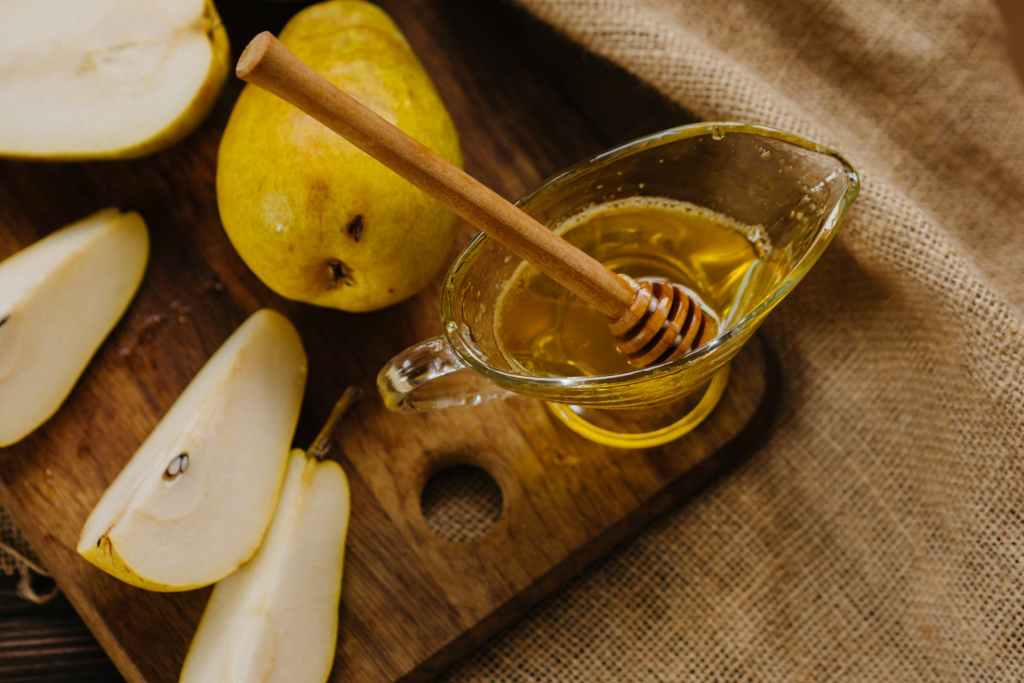
There are two non-negotiables on the culinary front for me. She has to eat more fruit and and she has to have a teaspoon of honey every morning at breakfast. Through trial and error, I found the acceptable fruits to include in the weekly shop rota (apples, bananas and some berries are OK but pears are not). I read honey has some good health benefits and cold fighting properties so it is with a dramatic shudder every morning that she takes her dose.
‘Ewww!’ She says screwing her face up into a frown. She swallows and then says ‘It’s down!’ dramatically. That is her little honey routine, always done in the same way.
I feel my cooking efforts have paid off, she looks better, and is ill less frequently.
Getting her to drink more water is more of a challenge altogether. I always make sure she has a fresh, and full, glass of water and nag her during the day to drink it. She points at the still-full glass and says: ‘It’s there!’ as if the mere presence of it next to her is enough to keep her hydrated.
If you have any top tips for fussy eaters of all ages, please do share them!
 Number Eighteen, in the corner